A work event can be harder to dress for than an ordinary office day. A networking reception, team dinner, client presentation, and daytime conference may all call for different levels of polish, even when the invitation simply says business casual. The goal is to look considered and feel like yourself, not to assemble a costume for work.
A reliable starting point is one professional foundation, one comfortable layer, and one detail that gives the outfit personality. From there, let the setting and schedule do the editing. A thoughtful work event outfit should work while you are seated, standing, walking, and greeting people—not just in a quick mirror check before leaving home.
Read the invitation and the room
Start with the event information you actually have: time of day, venue, stated dress code, and planned activities. A daytime gathering at an office often makes a crisp top and tailored trousers feel appropriate. An evening reception may allow a more expressive color or a refined skirt. A meal at a restaurant can call for a layer you can remove once you are seated.
If the invitation is vague, consider the hosts and the purpose. A client-facing event may feel more formal than an internal team gathering. When possible, ask the organizer what guests are likely to wear. If asking is not practical, choose a flexible business casual event look that can shift slightly: a blazer over a simple top, with trousers or a skirt that feels comfortable for the venue.
Also consider the full schedule. If you are going straight from work, choose pieces that already make sense in your regular wardrobe rather than relying on a dramatic change. If there is a commute or a walk between locations, practical shoes and a layer you can carry easily matter as much as the outfit’s appearance.
Build around one polished anchor
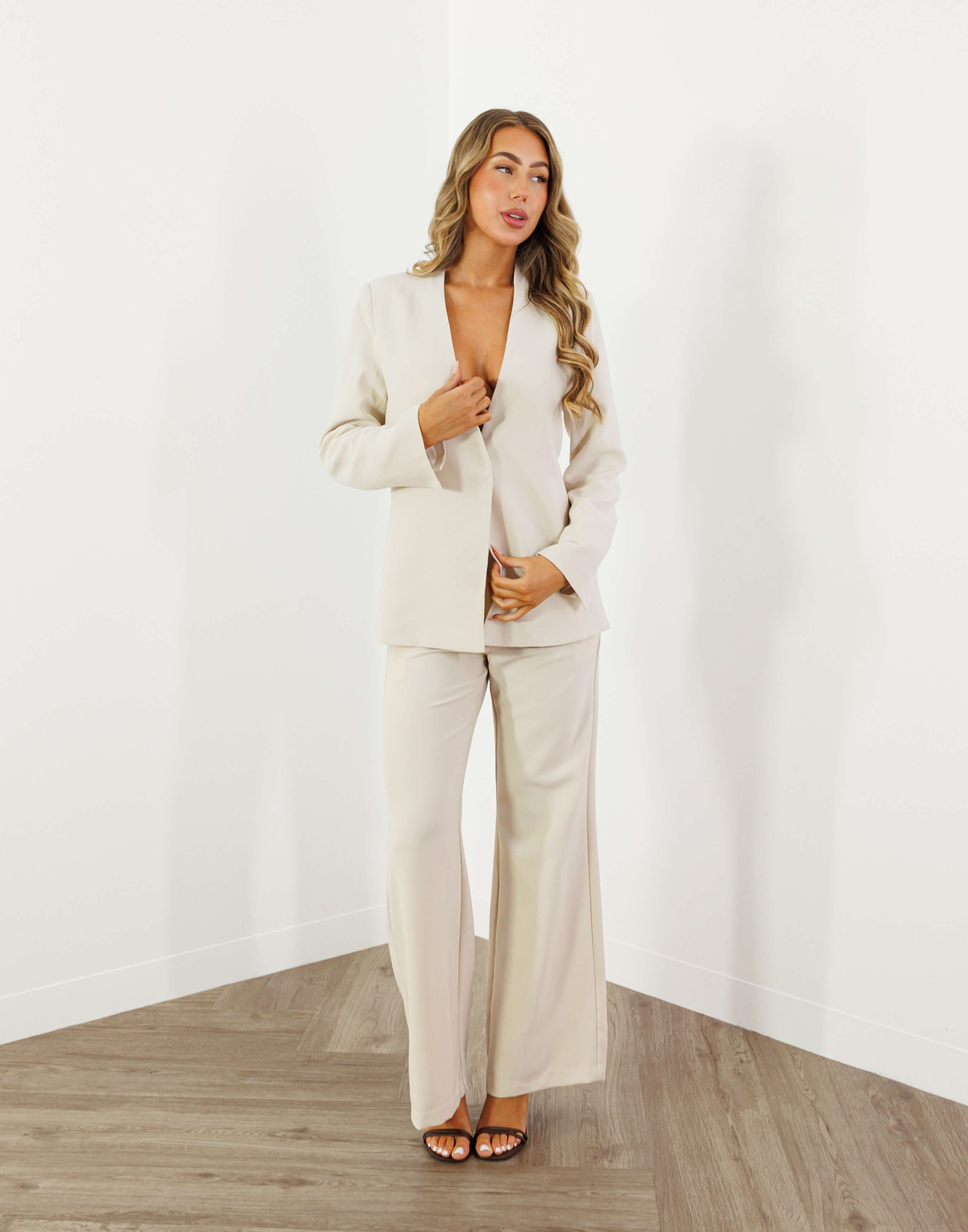
Pick one piece to set the tone, then keep the rest of the outfit quieter. A blazer is a useful anchor because it can add structure to a simple base without requiring a formal suit. A Huda Relaxed Blazer can be considered as one option for a softer blazer outfit; style it with a clean top and straightforward bottoms so the overall look stays balanced.
Other anchors might include a neat collared shirt, a refined knit, or trousers with a clear crease. The point is not to make every item look dressy. When the foundation is polished, familiar pieces can keep the result approachable. For example, a white shirt with dark trousers and low-profile shoes can look composed without adding several attention-grabbing details.
Think about how the anchor works when the room changes. A blazer can come off during dinner and go back on for travel. A shirt can stand on its own at a warm venue and sit smoothly under a jacket later. Versatility makes the outfit feel easier, not less intentional.
Balance shape, length, and volume
Proportion often makes a bigger difference than adding another accessory. If your top layer is relaxed, try a neater top underneath and bottoms with a defined shape. If you choose wide-leg trousers, a tucked or shorter top can clarify the waistline. A longer shirt can work untucked when the hem and trousers create a clean line rather than competing lengths.
For a skirt or dress, consider where the hem lands in relation to the jacket. A cropped jacket can emphasize the waist, while a longer layer can create a continuous line over a simpler silhouette. Neither is a universal rule; try the combination while sitting and walking, too. A hem that shifts or a jacket that pulls may distract you throughout the event.
Fit is personal, and comfort matters more than following a prescribed silhouette. Choose pieces that let you move naturally and feel at ease. If you are comparing garment measurements or deciding between sizes, consult the size guide as one helpful reference, then consider how you prefer clothing to sit and what you plan to wear underneath.
Choose fabrics for the actual schedule
Fabric affects both the impression and the practical experience of an event. A crisp woven shirt can feel especially polished, while a soft knit may be more comfortable for a long day. A jacket in a fluid fabric can pack more easily than a structured layer, but may need a little care after time in a bag. Think about sitting, travel, indoor temperatures, and how much movement the day involves.
Check care labels before wearing a piece for the first time, especially if it wrinkles easily or calls for a particular cleaning method. If a garment needs pressing, give yourself time rather than trying to solve creases at the last minute. Hang a blazer on a suitable hanger between uses, and fold or store delicate pieces according to their care instructions.
Temperature changes are easy to overlook. Air-conditioned meeting rooms, outdoor patios, and evening travel can feel different within the same event. A light layer or a scarf that works with your outfit gives you options without requiring a second complete look.
Keep accessories deliberate and comfortable
Accessories can make a simple outfit feel finished, but a work event rarely requires every detail to compete. Choose one focal point—a distinctive earring, a polished belt, a watch, or a bag with clean lines—and let other accessories support it. If your outfit already has a strong color or interesting texture, quieter jewelry may help preserve a calm overall effect.
Shoes deserve a practical test. Wear a pair you can stand and walk in for the likely duration, and consider the route from parking or transit to the venue. A refined flat, loafer, or comfortable low heel can look professional without making the evening about your feet. If you prefer a higher shoe, consider whether you can comfortably move between the event’s different settings.
Keep a bag useful rather than oversized for the occasion. It should hold essentials without adding bulk or needing constant adjustment. Before leaving, check that jewelry fastenings are secure and that any belt, strap, or scarf sits comfortably while you move.
Use color without making the outfit feel loud
A neutral base is an easy way to make separate pieces work together, but neutral does not have to mean plain. Navy, brown, cream, gray, and black can create a composed foundation. Add color through a blouse, a subtle print, a bag, or one piece of jewelry. Repeating a color in two places—such as a top and a small accessory—can make the combination feel connected.
If you want a print, let it be the most noticeable element and keep nearby pieces simple. If you prefer texture, combine only a couple of distinct surfaces so the outfit still feels cohesive. Try the complete look in the lighting you expect to encounter when possible; a color that reads quietly at home may feel more vivid under event lighting.
Make a quick decision, then stop tweaking
When you are unsure, use a short decision process. First, match the formality to the invitation and venue. Next, choose a comfortable base that suits the schedule. Add one layer for polish or temperature, then check proportions and shoes. Finally, select a single accessory or color accent and make sure nothing needs constant adjusting.
Try sitting, standing, reaching, and walking in the finished outfit. If the jacket pulls, the hem needs frequent attention, or your shoes feel wrong before the event begins, make a practical change. You do not need to replace the whole look. A different top, an easier shoe, or a simpler layer may be enough. The Connie Shirt offers one shirt option to consider with tailored bottoms, while browsing the Tops collection can help you think through different base layers.
A work event outfit feels most successful when it suits the occasion and lets you focus on the people there. Begin with a polished anchor, keep proportions comfortable, and use accessories with restraint. When every piece has a purpose—and you can move through the evening without fuss—you can look put together without feeling overdone.
Find a piece to make it your own.
Explore the current collection and ask us about the fit, details or availability of any style.
Explore Layers & outerwear