A stripe dress gives an outfit a clear point of view without asking for much styling. The pattern brings visual interest, while a simple change of shoes or layer can shift the mood from an easy daytime look to something suited to dinner. The most useful stripe dress outfit ideas start with the dress itself: its length, sleeve shape, stripe direction, and overall volume. Then add pieces that support those details rather than compete with them.
Think of stripes as a flexible base, not a strict styling challenge. A relaxed silhouette can work with crisp accessories, while a more fitted shape may feel balanced with a soft layer. The choices below offer practical ways to make casual dress style feel considered, whether you are getting ready for errands, a patio lunch, or a low-key evening plan.
Start with the dress’s shape and stripe scale
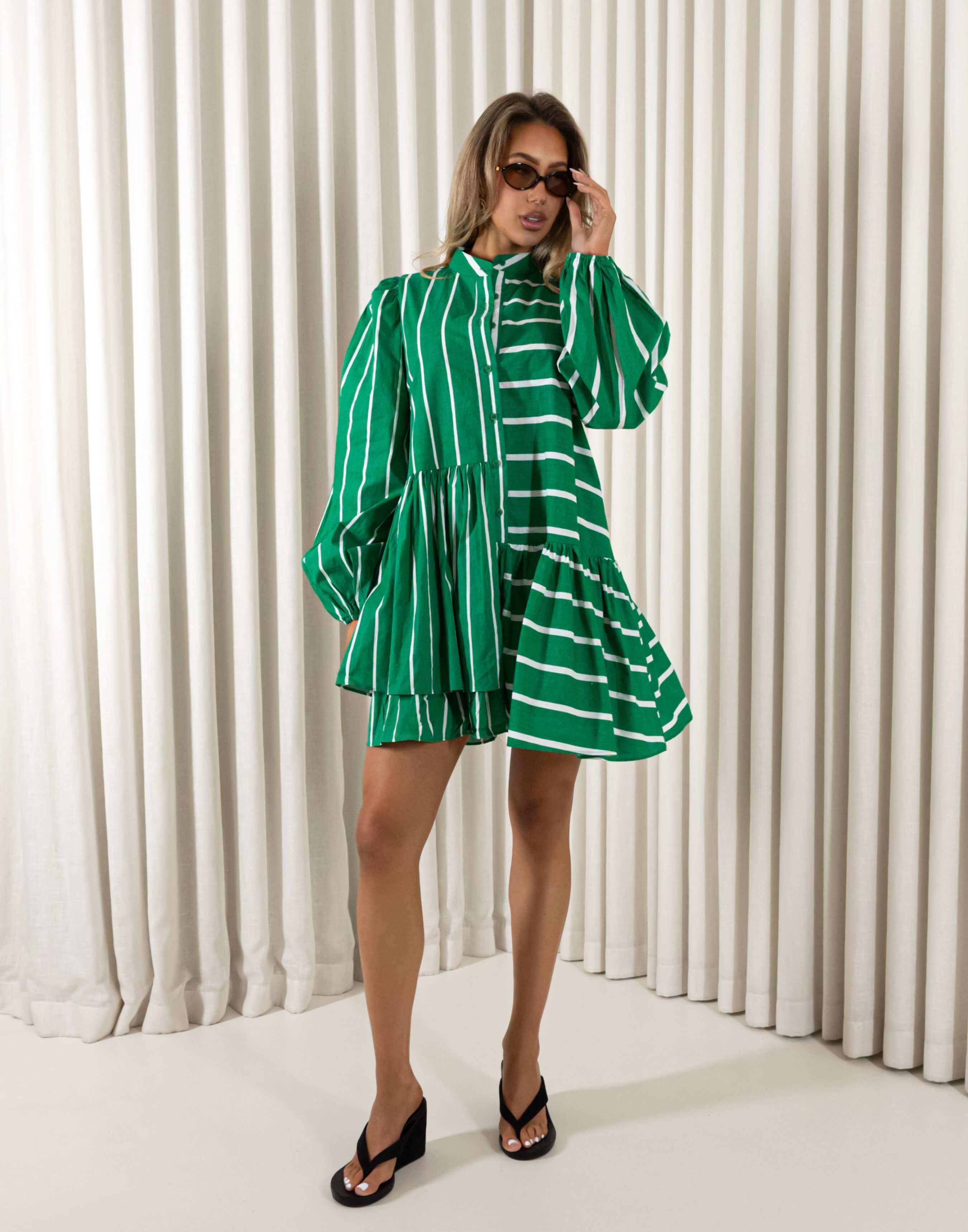
Before choosing accessories, take a moment to notice how the dress sits and moves. A short, roomy style has a different visual weight from a longer, closer-fitting one. Broad stripes tend to read boldly, while finer stripes can feel quieter from a distance. Neither is inherently easier to wear; the key is deciding whether you want the dress to be the main feature or a calm foundation for other pieces.
For a relaxed mini, try keeping the rest of the outfit simple: a neat shoe, a compact bag, and one understated accessory. If the dress has a longer hemline or a more defined shape, a light jacket or a belt can introduce structure. For a green stripe option, the Rhys Stripe Dress offers one example to consider when building a casual outfit around stripes.
Check where hems and sleeves land with the shoes and layers you plan to wear. A cropped jacket that ends near the waist can emphasize the dress’s shape; a longer open layer creates a more continuous line. These are visual options rather than rules, so use a full-length mirror and choose the combination that feels comfortable and balanced to you.
Keep a daytime outfit light and practical
For daytime, pair a stripe dress with shoes that suit your plans. Flat sandals, simple sneakers, or low-profile slip-ons can make the look feel easy without adding another strong pattern. If the dress already has bold stripes, a solid-color shoe creates a quiet finish. A neutral bag can do the same, while a colored accessory can pick up one of the dress’s tones for a little more energy.
Consider what you will carry and how long you will be out. A crossbody bag leaves your hands free, while a small shoulder bag keeps the silhouette compact. Sunglasses or a simple hair accessory can finish the outfit without making it feel overworked. If you are choosing between a stripe and another Dresses collection option, think about the setting and which pattern or shape feels most natural for the day.
Comfort is personal, so pay attention to movement as well as appearance. Sit, walk, and reach in the dress before heading out. If you like an extra layer, bring one that can be tied at the waist or folded into your bag. That gives you a practical option when the day shifts, while keeping the outfit’s clean, casual feel.
Use layers to change the mood
A layer can make the same printed dress feel suited to a different part of the day. A lightweight cardigan softens the look; a denim jacket adds casual structure; and an unbuttoned shirt can create an easy, open line. Choose one layer at a time at first, especially if the stripes are prominent. This keeps the outfit readable and lets you decide whether it needs anything more.
Proportion is worth a quick check. A shorter layer can highlight the waist area, while a longer layer brings a relaxed, vertical shape. If the dress is already loose, an open layer may preserve its ease better than a thick piece worn closed. If the dress is more streamlined, a little extra volume on top can create contrast. Adjust sleeves, hems, and closures until the layers sit comfortably rather than bunching or pulling.
For a polished but unfussy finish, repeat a color from the dress in one small detail: a bag, shoe, or earring. You do not need to match every item. A single echo of color helps the pieces feel connected while leaving the stripes room to stand out.
Choose accessories with a light hand
Stripes already create rhythm, so accessories work best when they have a clear purpose. A simple necklace can draw attention toward the neckline; small hoops or a cuff can add a subtle finish. If the dress has a strong neckline or decorative details, you may prefer to skip a necklace and choose one other accent. The aim is not to avoid personality, but to keep each element easy to notice.
Texture can bring interest without adding another print. Try a woven bag, smooth leather-look sandals, or a soft scarf in a solid color. If you enjoy mixing patterns, keep the scale and palette in mind: a small, low-contrast accessory print is often less visually busy beside bold stripes than a second large pattern. For a quieter alternative on another day, compare stripe styling with a floral option such as the Hathaway Floral Dress.
Belts can also change the silhouette, but they are optional. A narrow belt can mark the waist without taking over; a wider one adds a more defined focal point. Try the dress both ways and check whether the belt sits comfortably when you move. If it interrupts the pattern in a way you do not enjoy, leave it off and let the dress hang naturally.
Make a simple transition for evening
To take a stripe dress into an evening plan, you can often keep the dress and change just a few supporting pieces. Swap daytime shoes for a dressier sandal or low heel, choose a smaller bag, and add one more deliberate accessory. A light jacket or cardigan can stay in the mix if it works with the setting; a neat open layer may feel more relaxed than a heavy outer piece.
Keep the transition realistic. If you will be walking, select shoes you can comfortably manage. If the evening is informal, there is no need to make the outfit feel formal simply because the time has changed. The difference might be as small as a more structured bag, a different earring, or a touch of color on the lips. The dress remains the anchor, and the details set the tone.
For another way to think about a printed dress for different plans, you might also explore a floral silhouette such as the Geoff Floral Dress. Comparing pattern, length, and styling possibilities can help clarify what kind of outfit feels right for your occasion.
Let fit and fabric guide your choices
Styling starts with how the dress feels on your body, not with a formula. Look at the product details and use the size guide as a reference when choosing a size. Consider the intended ease, hem placement, and how you like a dress to fit through the shoulders and waist. A familiar size can be a starting point, but personal preference and garment details matter.
Fabric care is part of keeping a dress ready to wear. Check the garment’s care information before washing or steaming, and avoid assuming that every fabric responds the same way. If you are unsure, a cautious approach—such as testing a low-heat setting on an inconspicuous area when appropriate—can help you decide how to handle wrinkles. Store the dress so it can hang freely, and make sure it is dry before putting it away.
As you get dressed, use a flexible three-step check: does the dress feel comfortable, do the shoes suit the plan, and does the outfit need one layer or accessory for balance? If the answer is yes, add that piece and stop there. A stripe dress outfit can feel fresh precisely because the pattern does enough on its own. Keep the choices useful, wear what feels like you, and let the day—not a rigid styling rule—decide the final details.
Find a piece to make it your own.
Explore the current collection and ask us about the fit, details or availability of any style.
Explore Dresses