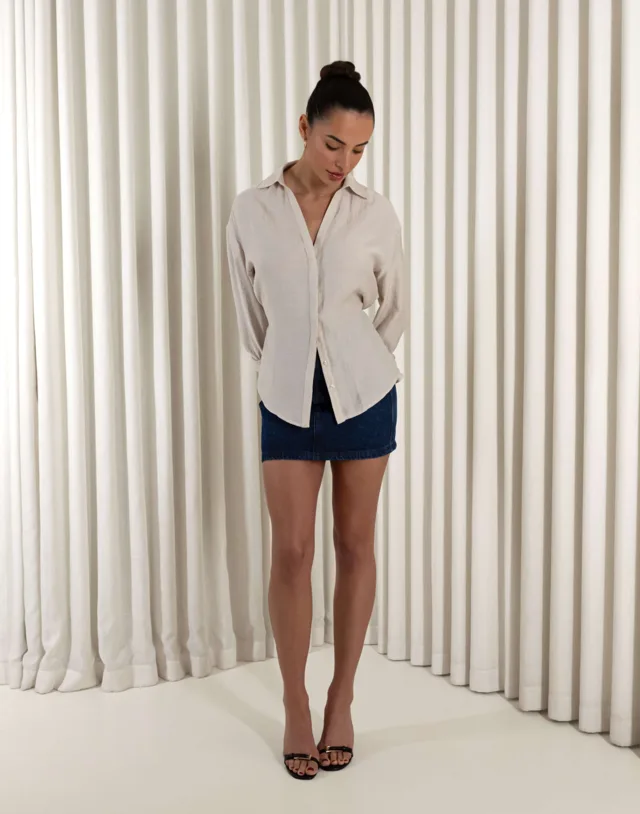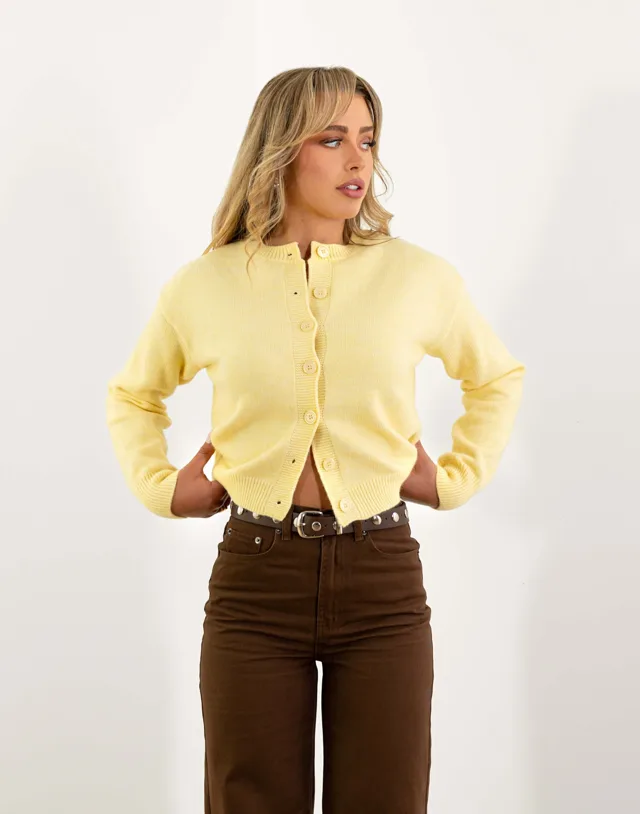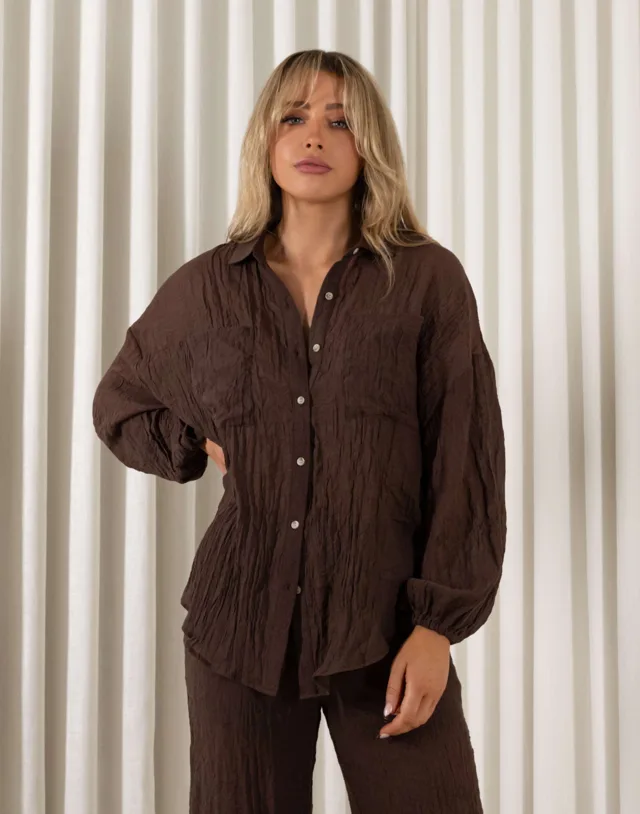
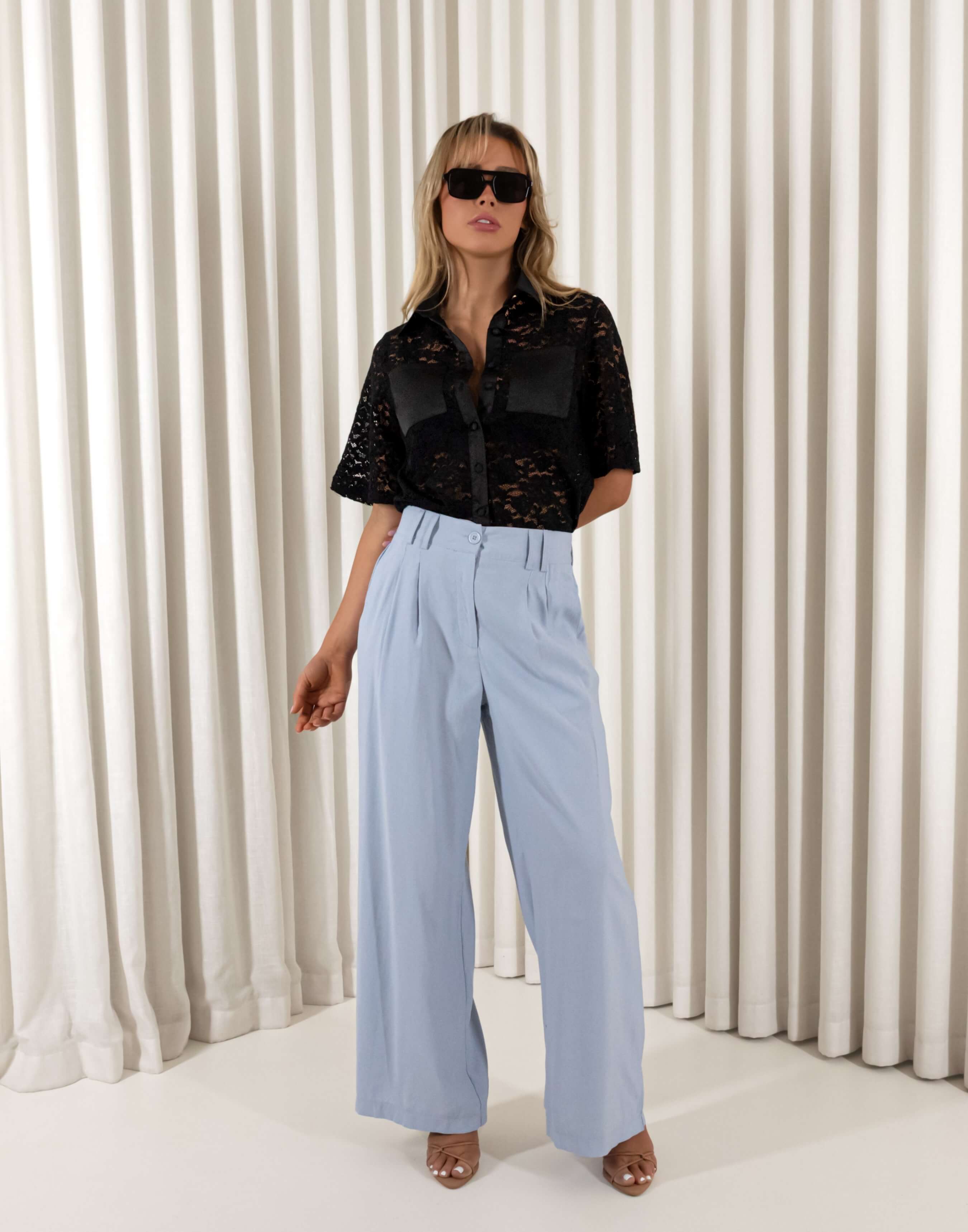
High-waist trousers can make getting dressed feel straightforward: the waistband gives a clear place to tuck or end a top, while the leg shape sets the outfit’s overall mood. The key is finding a trouser fit that feels comfortable in motion, not simply judging the silhouette while standing still. A useful try-on checks where the waist sits, how the fabric falls, and whether the hem works with the shoes you actually wear.
There is no single ideal rise or leg width. Your preferred fit may change with the fabric, occasion, and styling. Treat these checks as a flexible way to compare options, whether you are considering Emma Wide Leg Pants or browsing the wider Bottoms collection.
Start with where the rise sits
“High waist” describes a general placement, not one fixed point on every body. Put the trousers on as intended and notice where the waistband lands. It should feel stable without digging in, rolling, or needing constant adjustment. Sit, stand, and take a few steps: a waistband that feels fine while upright may pinch when seated or shift during movement.
Check the rise from front to back, too. If the front pulls down or the back feels low when you bend, the rise or overall cut may not suit your proportions. If the crotch hangs lower than feels comfortable, sizing up may not solve the issue; the pattern’s rise and shape matter. Compare measurements with the brand’s size guide, and use them as a starting point rather than a promise of identical fit across styles.
Read the waistband and closure
A waistband should sit smoothly enough for your preferred tops. With a tucked-in shirt, inspect the front and sides for pulling or ripples. With a fitted knit, notice whether the waistband creates a line you would rather avoid. A button or hook should close without strain, but you should also be able to breathe comfortably and move through an ordinary day.
Details affect how a waistband feels and looks. Belt loops can offer styling flexibility, while pleats add shape and may create extra room at the front. A flat front often gives a cleaner line under lightweight tops. Neither option is universally better; focus on whether the construction lies as you like when standing and sitting. If you plan to wear a belt, try the trousers with one so you can judge the complete fit.
Check the seat, hips, and pockets
Look at the fabric across the seat and hips. Horizontal tension lines, pockets that gape, or a fly that strains can suggest the cut is too snug through that area. Excess fabric that droops or bunches may mean the shape or size is not working as intended. Smoothness is a useful visual cue, but comfort matters just as much: walk, sit, and bend naturally before deciding.
Pockets can change how trousers sit. Deep or angled pockets may pull open if there is tension, while pocket bags can show through a thin fabric. Try the trousers with your hands out of the pockets, then check again with your usual small essentials if you carry them there. Avoid judging the fit by pulling the fabric into place; it should settle comfortably on its own.
Choose a leg shape that works with your proportions
Wide leg pants create a generous line from hip to hem, but “wide” can mean anything from a gentle flare to a much fuller silhouette. Consider the balance you want rather than aiming for a prescribed body-proportion formula. A closer-fitting top can make the leg shape the focus; a relaxed shirt or sweater can create an intentionally easy, volume-on-volume outfit.
For a simple starting point, pair a wide leg with a tucked tee, a neat knit, or a top that ends near the waistband. If you prefer an untucked layer, try one that finishes around the hip and check that it does not catch awkwardly on the fullest part of the trousers. A longer cardigan or jacket can work, too, especially when worn open to show the waistline and keep the outfit’s vertical lines visible.
Straight and tapered legs offer different options when you want less volume. A straight cut can feel versatile with loafers, sneakers, or a low heel; a tapered shape can pair neatly with a boot or a shoe that shows the ankle. Compare cuts in the Bottoms collection by imagining your regular tops and shoes alongside them, not as isolated product images.
Get the hem right for your shoes
Hem length can transform how trousers look. Try them with the shoes you expect to wear most often: a hem that works with flats may fall differently over a heel or chunky sole. Notice whether the fabric brushes the floor, breaks gently over the shoe, or ends above the ankle. The choice is personal, but the hem should not make walking feel awkward or require you to hold the fabric out of the way.
If you are considering alterations, first confirm that the waist, rise, and seat already feel right. Hemming can adjust length, but it will not correct a waistband that slips or a seat that pulls. Keep the leg opening in mind as well: a very wide hem may need a different finished length than a narrow one to preserve the line you like. Ask an alterations professional about the garment’s construction and fabric before deciding what can be changed.
Style for the setting, not a set of rules
For an everyday outfit, try high-waist trousers with a cotton tee, a light layer, and comfortable flats or sneakers. A half-tuck can define the waist without making the look feel overly formal. For a work-leaning combination, choose a crisp shirt or fine knit, then add a blazer or cardigan that moves easily through the shoulders. Keep the palette tonal for a calm effect, or let a contrasting top make the trousers feel more relaxed.
Accessories can reinforce the proportions. A belt draws attention to the waistband; a short necklace or scarf brings detail near the face. A structured bag can balance a flowing leg, while a softer bag keeps the outfit casual. In warm weather, breathable layers and open footwear may feel practical; when the temperature drops, add tights only if the trouser cut and fabric allow comfortable movement, then layer with a jacket that does not bunch beneath a coat.
Let fabric guide care and your final choice
Fabric affects drape, structure, and how much a trouser may change after washing. Check the care label before laundering, especially for blends, delicate finishes, or pieces that call for a specific method. When in doubt, avoid assuming that every pair can be treated alike. Store trousers on a suitable hanger or fold them along their natural crease, if present, to keep the leg line tidy between wears.
Use a short decision process when comparing pairs: does the waistband stay comfortable while seated; do the hips and seat lie as you prefer; does the leg shape suit the tops you own; and does the hem work with your everyday shoes? If most answers are yes, the trousers may earn a place in your wardrobe. If one area consistently distracts you, consider another rise, cut, or size rather than forcing a styling fix.
The best high-waist trousers are the ones that support how you like to dress. Focus on movement, fabric, and the complete outfit, and allow your preferences to guide the details. A considered fit can make wide-leg silhouettes feel approachable, but comfort and personal style—not a checklist—should have the final say.
Find a piece to make it your own.
Explore the current collection and ask us about the fit, details or availability of any style.
Explore Bottoms