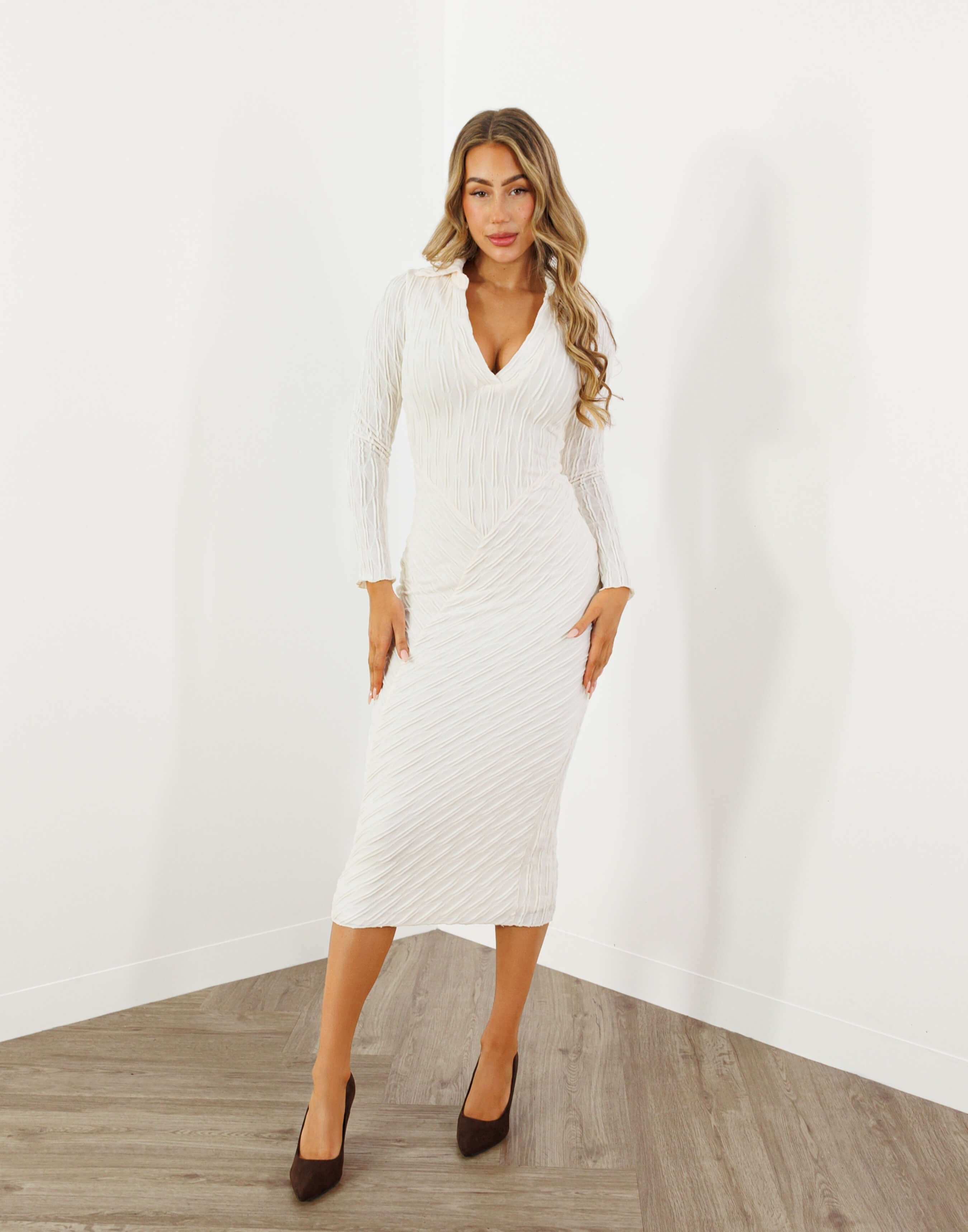
A dress neckline is one of the first details you notice, and it can influence the whole feeling of an outfit. A crisp collar may read polished; a soft scoop can feel relaxed; a high neckline can make a simple dress look especially considered. The right choice is not about following a rule for your body. It is about finding a shape you enjoy wearing and that works with the rest of your wardrobe.
This dress neckline guide offers a practical way to compare shapes, think about proportions, and choose accessories and layers. Use it as a starting point when browsing, then let comfort and personal style make the final call.
Start with the feeling you want
Before comparing neckline names, picture where you plan to wear the dress and what mood you want it to have. A collared neckline can bring structure to a weekday outfit, while a rounded neckline may feel easy and familiar. An open V can make a dress feel a little more relaxed or dressed up depending on its fabric, sleeves, and accessories.
Think about the clothes you reach for most. If you often wear button-ups, jackets, or tidy accessories, a collar or higher neckline might feel natural. If you prefer simple layers and delicate jewelry, a scoop or V-neck may fit your routine. When choosing a dress, notice whether the neckline feels like an extension of your closet—or an interesting change you would genuinely enjoy.
Get to know the main neckline shapes
A crew or jewel neckline sits higher and usually has a clean, simple outline. It can make a dress feel neat and understated, especially when the fabric has texture or the silhouette has another focal point. A scoop neckline curves lower and offers a softer, more open frame. A V-neck creates a vertical line, with the depth of the V making a noticeable difference to the overall look.
Square necklines have a more defined, geometric edge and can bring a vintage-inspired or tailored note. Boat necklines extend across the upper chest, creating a wide horizontal line that can look graceful with minimal jewelry. Collared necklines add visible structure and detail. Each shape comes in many variations, so the garment’s exact cut matters as much as the category.
For examples to compare, browse the Dresses collection and look at how different necklines relate to sleeves, prints, and overall dress shapes. You can also compare the collared line of the Ernest Midi Dress with the neckline on the Phoebe Polka Dot Dress. Focus on the complete design rather than assuming one shape will work exactly the same way on everyone.
Use proportions as a styling tool
Proportion is about the relationship between parts of an outfit, not about correcting your body. A high neckline paired with a long sleeve can create a more covered, uninterrupted look. If that feels visually dense to you, try rolling a sleeve, choosing a lighter layer, or adding an open jacket. Conversely, a more open neckline can be balanced with a cardigan, a scarf, or a jacket worn open.
Consider the dress’s other lines, too. A wide neckline with a full skirt may create a different effect from the same neckline on a straight silhouette. A defined waist, gathered detail, or strong print can also draw the eye. Try stepping back from the mirror and noticing where your attention goes. If the outfit feels balanced to you, there is no need to adjust it to meet someone else’s idea of proportion.
Make comfort part of the decision
A neckline can look appealing on a hanger yet feel unfamiliar once you move around. In a fitting room, sit, reach, turn, and take a few steps. Check whether you can wear your usual bra comfortably, whether the edge stays where you want it, and whether the opening feels right for the setting. These are practical preferences, not pass-or-fail tests.
Pay attention to the garment’s construction and fabric. A structured edge may hold a crisp shape, while a soft knit or drapey fabric may sit closer to the body. Fabric care matters as well: follow the garment’s care instructions, especially when laundering a neckline with a collar, trim, or delicate finish. Careful handling can help preserve the shape you liked when you tried it on.
If you are shopping online, review the product details and available sizing information before deciding. The size guide can help you consider measurements alongside the listed garment information, though personal comfort and preferred ease still matter.
Choose jewelry and layers that work with the neckline
Necklaces are easiest to style when their shape has room to relate to the neckline. A short pendant or fine chain can sit neatly with a V-neck; a longer chain can echo its vertical line. For a crew or jewel neckline, try earrings, a bracelet, or a necklace that rests above the fabric edge. A square neckline often pairs well with simple shapes that do not compete with its clean angles.
Collars and boat necklines may already provide enough detail around the face, so you might prefer small earrings or no necklace. That is only one option: a fine chain can still work if it sits comfortably and does not tangle with the collar. For layering, compare the jacket or cardigan opening with the dress. An open-front layer keeps more of the neckline visible; a closed layer creates a different, more covered effect. Try both before deciding.
Let fabric, print, and occasion influence the choice
A neckline does not exist on its own. A bold print may feel best with a simple shape that lets the pattern lead, while a plain dress can make room for a collar, square edge, or striking necklace. A lightweight fabric may drape differently from a crisp one, so notice whether the neckline stays smooth and comfortable through movement.
For an occasion, think about the full outfit rather than choosing by dress code alone. A higher neckline with polished earrings can feel ready for dinner; an open neckline with a tailored layer can suit a daytime event. A gathered detail or statement accessory may shift the mood again. The Jason Midi Dress is another example to consider while comparing how neckline and dress details contribute to an occasion-ready look.
A simple try-on process for finding your match
When you have a few possibilities, use the same quick process for each one. First, name what you like about the neckline: its shape, coverage, structure, or how it frames an accessory. Next, check comfort while moving and sitting. Then add one layer and one accessory you already own. Finally, look at the whole outfit from a little distance and ask whether it feels like something you would choose again.
If you are undecided between two shapes, consider which one works with more of your real routine. A versatile neckline might pair with your usual jacket and jewelry, while a more distinctive one could be the choice that makes an occasion feel special. Both can be worthwhile. Personal style develops through wearing what feels comfortable, expressive, and practical for you—not through a single universal formula.
Find a piece to make it your own.
Explore the current collection and ask us about the fit, details or availability of any style.
Explore Dresses