Building a skirt outfit is a small exercise in visual balance: one piece brings a certain length, volume, or texture, and the rest of the outfit can respond to it. There is no single proportion that works for everyone or every occasion. Instead, look at how the pieces meet, where the outfit draws the eye, and how comfortable you feel moving through your day.
These ideas make skirt proportions easier to assess without turning dressing into a set of strict rules. Start with the skirt you want to wear, then adjust the top, layers, footwear, and accessories one at a time. A change as simple as tucking a shirt or swapping a substantial shoe for a streamlined one can shift the whole look.
Begin with the skirt’s length and shape
Length gives you a useful starting point. A short skirt leaves more leg visible, a midi skirt creates a longer uninterrupted section of fabric, and a maxi skirt carries the eye toward the hem. Those effects change depending on the cut: a straight silhouette, an A-line shape, and a fuller skirt each occupy space differently.
Notice where the hem falls in relation to your shoes and any visible legwear. If the outfit feels visually interrupted, try a shoe in a similar color to your tights or skin tone, or choose a simpler shoe shape. If you want more contrast, let the shoe become a deliberate accent instead of adding several competing details at once.
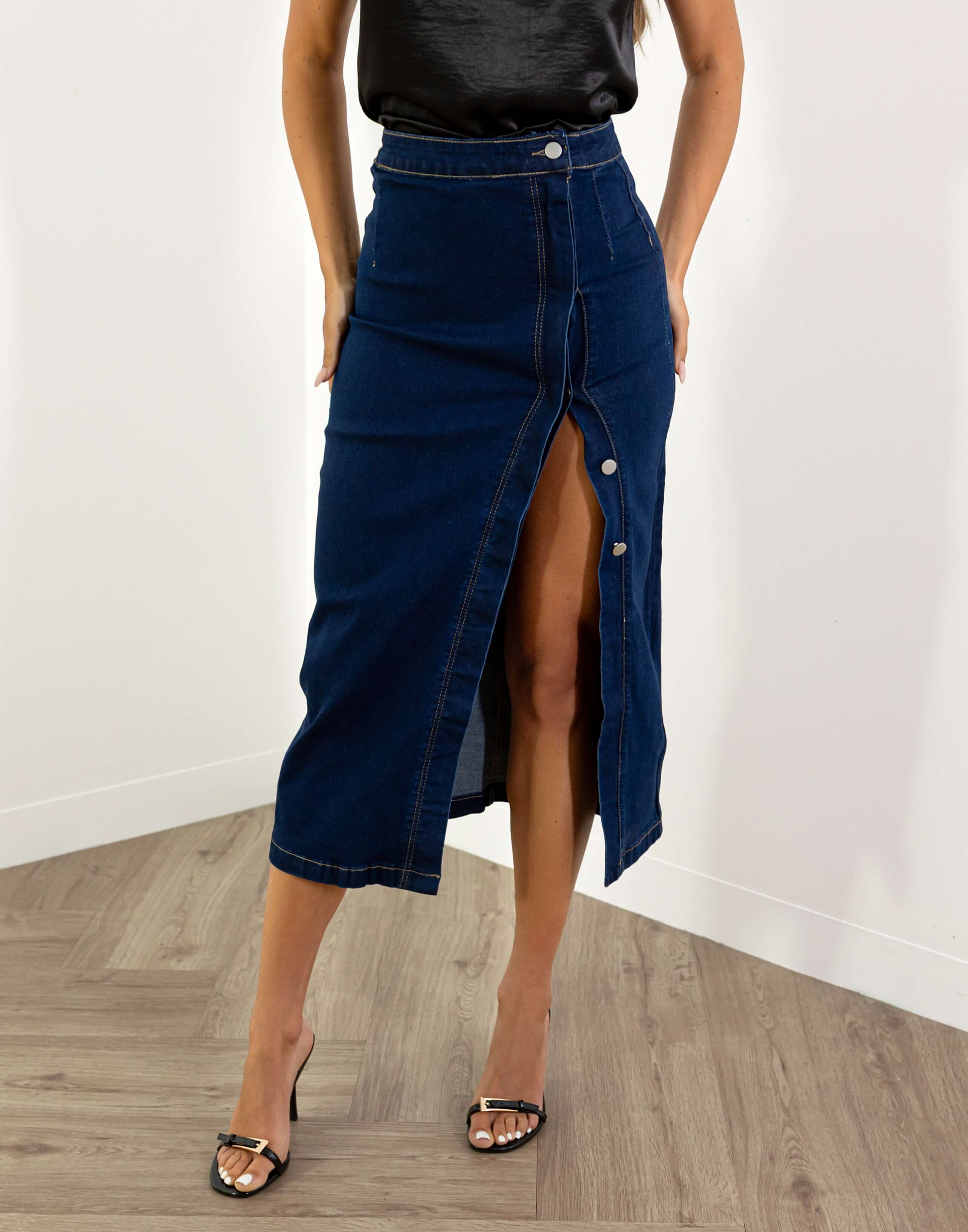
For a denim starting point, consider the Gabriel Denim Skirt. A midi length can work with a fitted tee, a button-front shirt, or a knit, depending on the mood you want. The goal is not to disguise the skirt’s shape but to make the relationship between hem, top, and shoes feel intentional.
Balance volume with a considered top
When a skirt has a lot of movement or gathers, a closer-fitting or visually simple top can keep the outfit from feeling crowded. That does not mean every full skirt needs a tight shirt. A relaxed top can work too; try a partial tuck, a shorter hem, or sleeves pushed up to show a little more shape and create definition.
With a straighter or slimmer skirt, you can experiment with a looser blouse, a boxy tee, or a soft sweater. Pay attention to where the top ends. If it covers much of the skirt’s waistband and hip area, a front tuck or a higher hemline may restore a clear transition between the two pieces.
As you test skirt outfit ideas, change one proportion at a time. Keep the shoes and accessories in place while you try a tucked top, then compare it with the untucked version. That small styling experiment makes it easier to see whether the outfit needs more definition, more ease, or no change at all.
Use the waistline to create a visual anchor
A visible waistline can help connect the top and skirt, especially when both pieces have relaxed shapes. A full tuck creates a crisp break, while a partial tuck keeps the look casual. A belt can add another point of definition, but it is optional; a clean overlap between a cropped top and a high-waisted skirt can do similar work.
Think about where the waistband sits and how the top’s hem interacts with it. If a shirt bunches under a belt or feels bulky when tucked, try a lighter layer, a half-tuck, or a top designed to end nearer the waistband. You can also leave a shirt open over a simple base layer, allowing the skirt to remain visible while adding a relaxed vertical line.
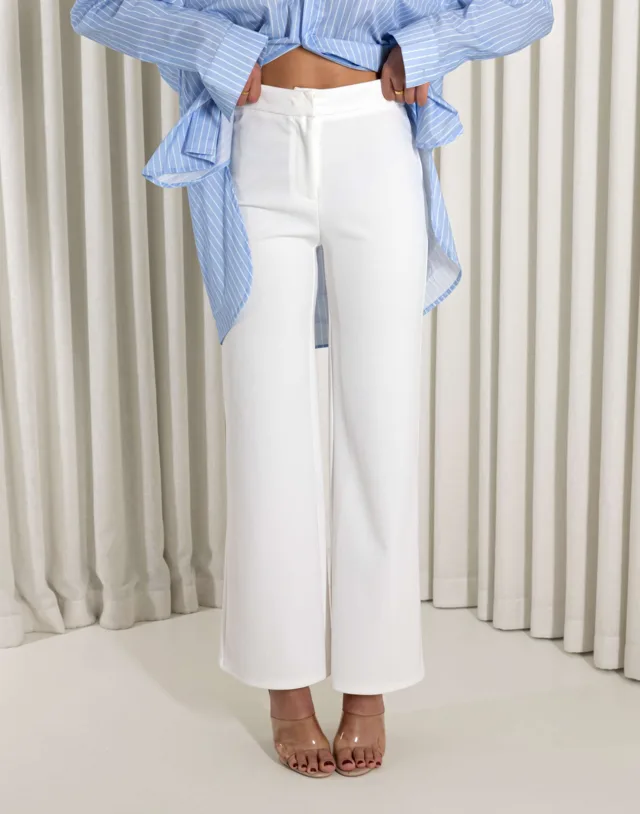
For a different bottom option, the Verity High Waist Pants can help illustrate how a defined waist changes an outfit’s outline. If you are comparing measurements across styles, consult the boutique’s size guide as one practical reference, then consider how you prefer a garment to sit and feel.
Choose layers that support the silhouette
Outer layers can either repeat a skirt’s shape or add contrast. A shorter jacket often leaves more of the skirt’s line visible, while a longer cardigan or coat creates a continuous vertical layer. Neither approach is automatically better. Consider whether you want the skirt to be the focal point or one part of a more streamlined look.
With a voluminous skirt, a jacket that ends near the waist can preserve its movement and make the outfit feel defined. With a slim skirt, a longer open layer can add softness and balance. If a long layer hides the skirt’s shape, leaving it unbuttoned or choosing a lighter fabric can bring back some separation.
Weather and plans matter, too. A fine knit or light shirt can add coverage without much bulk; a structured jacket brings a sharper finish. Try sitting, walking, and reaching in the complete outfit so the layers work in motion, not only in front of a mirror.
Let shoes and accessories finish the balance
Shoes influence how a skirt’s hem reads. A delicate flat can keep an outfit light, while a chunkier shoe can make a flowing skirt feel more grounded. With a tailored or narrow skirt, a low-profile sneaker or simple sandal can keep the look easy. Use these as starting points rather than fixed pairings: color, texture, and the occasion all affect the result.
Accessories can provide a focal point, but they need not compete with every part of the outfit. If the skirt has a noticeable print or texture, a simple bag and understated jewelry may let it lead. If the skirt and top are quiet, a belt, earrings, or a distinct bag can add interest. Repeating one color across shoes and an accessory is an easy way to make separate pieces feel connected.
For active days, compare a skirt with a practical alternative such as Crawford Floral Skorts. The choice can come down to what your plans call for, how you want to move, and which silhouette feels right—not a strict styling formula.
Match fabric, care, and occasion
Fabric changes how a skirt hangs and how much structure it brings. A crisp fabric may hold a more defined outline, while a softer one can fall closer to the body or move more freely. Pairing fabrics with different visual weights can be appealing: a fine knit with a more structured skirt, for example, or a lightweight blouse with a substantial-looking bottom.
Check the garment’s care instructions before washing, steaming, or storing it. Fabric blends and finishes can call for different handling, so do not assume that every skirt should be treated alike. When packing, consider whether a piece creases easily and whether it can be paired with more than one top or shoe. These details help an outfit stay useful beyond a single occasion.
For a dinner or event, a more refined top and intentional accessories can shift the same skirt into a dressier direction. For everyday wear, a tee, practical layer, and comfortable shoes may be all it needs. Browse the Bottoms collection when you want to compare skirt shapes and other outfit foundations.
A flexible check before you head out
When the outfit is nearly there, take a quick look at three things: where the top ends, how the skirt’s volume meets the layer, and whether the shoes feel connected to the hem. If one area seems busy, simplify it. If the outfit feels flat, add one point of contrast through texture, color, or a defined waistline.
Then check the practical side. Can you walk comfortably? Does the layer stay in place? Is the outfit suited to the setting and weather? Balanced styling is not about making every part match or following a prescribed silhouette. It is about making a few thoughtful choices so the skirt, top, and finishing pieces feel like they belong together—and still feel like you.
Find a piece to make it your own.
Explore the current collection and ask us about the fit, details or availability of any style.
Explore Bottoms