A cardigan is an easy way to add warmth, color, and texture, but a layer can also blur the outfit beneath it when every piece has the same loose shape. The answer is not a strict rule about which silhouettes you can wear. It is a little attention to proportion: what shows at the neckline, where the hem lands, and how the layers relate to one another.
Think of cardigan layering as a way to compose an outfit, not cover one up. A defined base, an intentional opening, or a visible waistline can help the whole look feel considered while staying comfortable. These ideas work across a range of cardigan lengths and personal styles, and they can be adjusted to suit the day.
Start with a base that has a clear role
Choose the layer closest to your body for a reason. A simple tee or fine knit can create a smooth foundation; a collared shirt brings structure; a fitted tank leaves room for a more substantial cardigan. The base does not have to be tight. What matters is that its neckline and hem make sense with the cardigan you plan to add.
For an uncomplicated cardigan outfit, pair a clean-lined top with jeans or trousers, then let the cardigan provide color or texture. If the cardigan is patterned, a quieter base can give it room to stand out. If the cardigan is a solid, the base can introduce a stripe, a soft contrast, or a subtle detail at the collar. Browse the Tops collection for ideas on choosing a starting layer.
Use the opening to create a vertical line
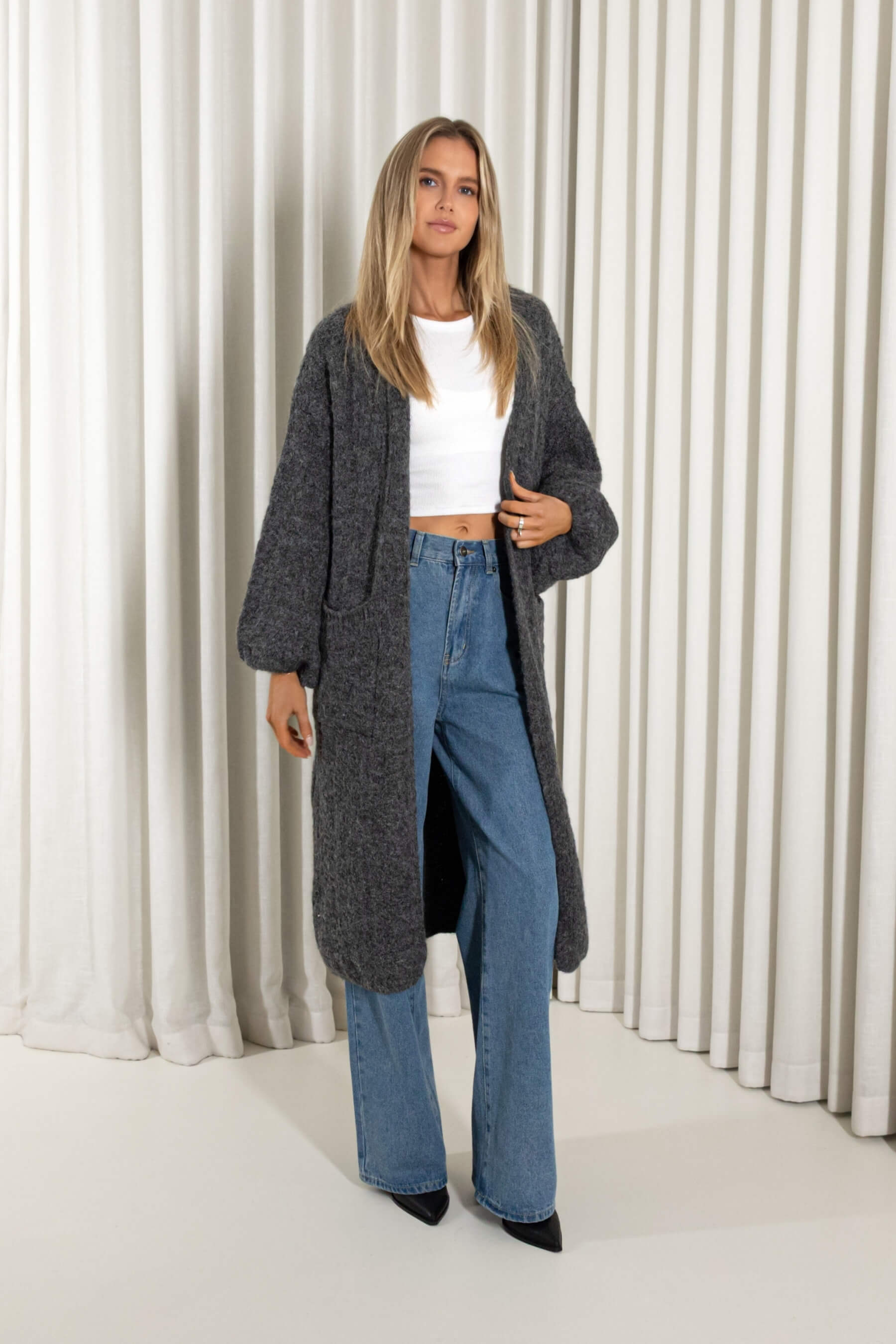
Wearing a cardigan open gives the eye a path from shoulder to hem and keeps the base visible. That open space can make a layered outfit feel lighter, especially when the cardigan and top are close in color. Try a tonal combination, such as a warm neutral over a lighter neutral, or use a darker cardigan over a brighter base for clear contrast.
Consider where the front edges fall in relation to your outfit. If they frame a tucked top and waistband, the opening can help draw attention to that shape. If the cardigan closes comfortably, fastening one or two middle buttons can create a different outline while leaving some of the base visible above and below. Experiment in a mirror rather than assuming one way of wearing it is best.
Balance cardigan length with the bottom half
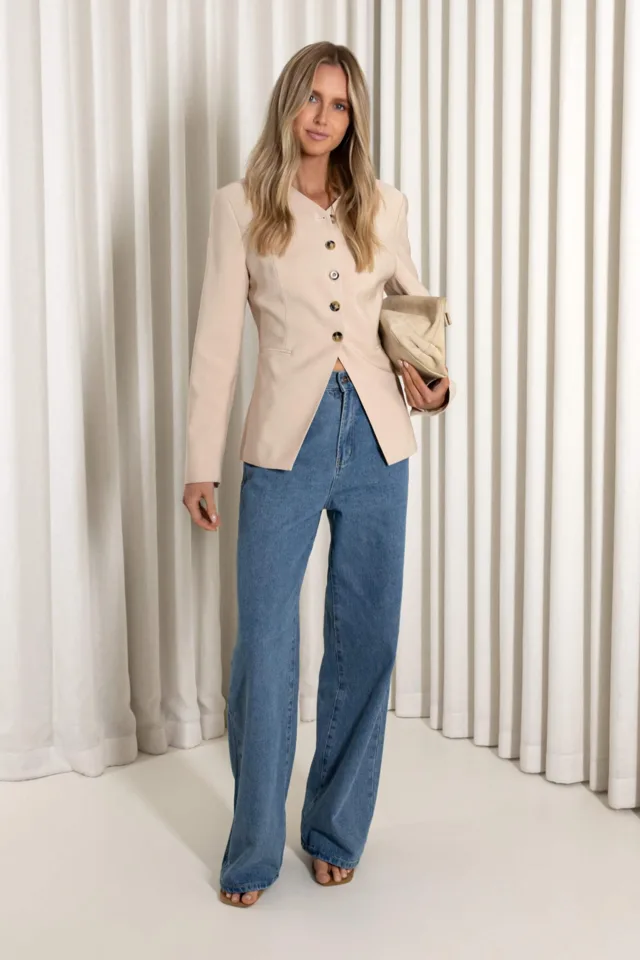
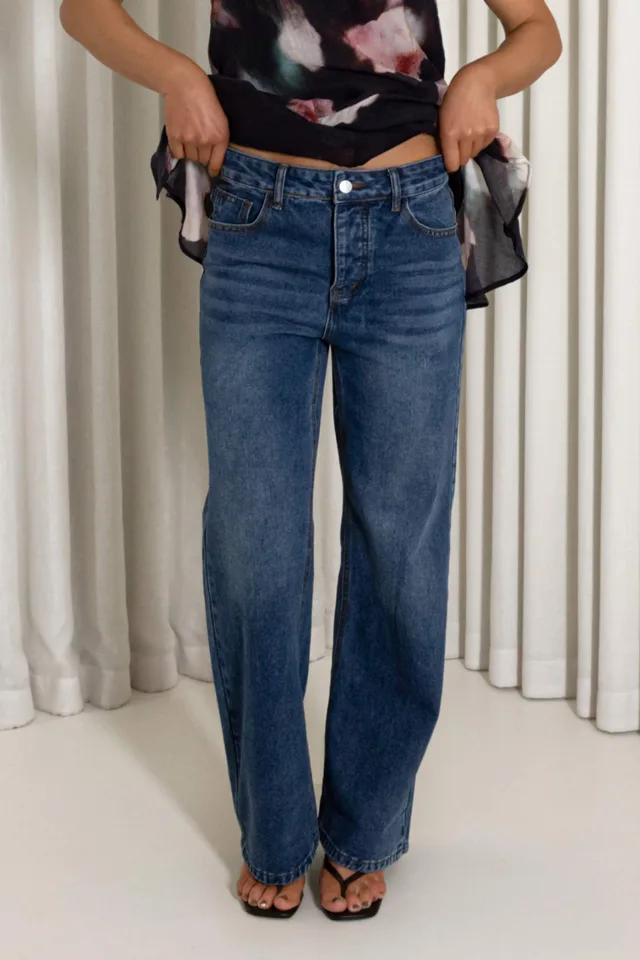
A shorter cardigan can sit near the waistband of high-rise trousers or a skirt, making the transition between top and bottom easy to see. A longer style can create a graceful line over straight-leg pants, leggings, or a column-shaped skirt. These are starting points, not prescriptions: the overall balance depends on the pieces, footwear, and amount of volume you enjoy.
When both the cardigan and bottom have generous volume, give one part of the outfit a little definition. A front tuck, a visible waistband, or a more streamlined top beneath the cardigan can help. Alternatively, keep the base and bottom close in tone so the outfit reads as one long line, with the cardigan adding another layer rather than dividing it. For a longer silhouette to consider, see the Landry Longline Cardigan.
Keep the waist visible without forcing a belt
Shape can come from more than a cinched waist. A tucked or half-tucked base creates a small point of definition; an open cardigan reveals the line of the top; and sleeves pushed gently toward the forearm can keep the overall look from feeling too covered. If you like belts, use one to connect the cardigan and bottom, but choose a width and position that feel comfortable with the rest of your outfit.
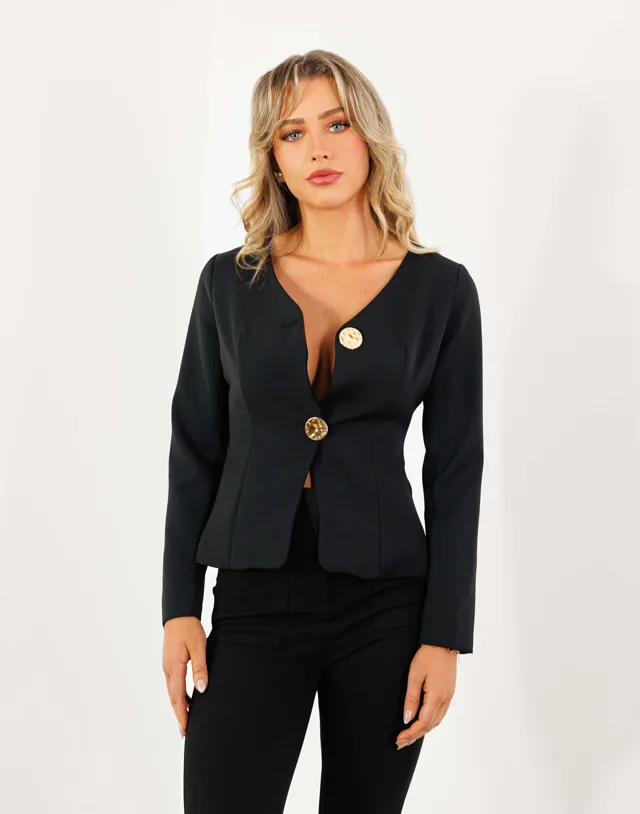
Another option is to fasten a cardigan and leave the lower buttons open over a skirt or pants. The opening offers movement and shows where the outfit continues beneath. With a button-front style, test the closure in motion—sitting, reaching, and walking—to see whether the shape still feels relaxed. The Kylie Cardigan can be a reference point when considering a button-front layer.
Mix light layers with attention to texture
Layering does not need to mean piling on weight. A fine-knit cardigan over a lightweight top can offer a useful extra layer without making the outfit feel overly bundled. If the base has a collar, ruffle, or other detail, check that it lies comfortably under the cardigan. Smooth layers often sit neatly together; more textured pieces can work well when there is enough room at the shoulders and sleeves.
Let one texture lead. A ribbed cardigan over a simple top, or a smooth cardigan over a patterned knit, gives the outfit contrast without asking every piece to compete. A stripe can also provide visual interest: the Hayes Stripe Knit offers one example to consider as a patterned layer. Keep other patterns quieter if you want the stripe to remain the focal point.
Finish the proportions with accessories
Accessories can help connect the layers and make the proportions feel deliberate. A necklace that follows the neckline draws attention to the base layer; a scarf can add color but may make a high neckline feel crowded. Choose one focal detail when the cardigan already has buttons, texture, or a bold pattern. Simple earrings, a watch, or a clean bag can finish the outfit without adding another visual interruption.
Shoes matter, too. A streamlined shoe can balance a longer cardigan and relaxed pants, while a boot or substantial sneaker can hold its own beside fuller layers. Use accessories to echo a color already present in the outfit, or introduce one small contrast. The goal is not to match every detail, but to give the layers a sense of connection.
Make a quick proportion check before you go
Before leaving, look at the outfit as a whole rather than judging the cardigan alone. Ask three questions: Can you see the base layer where you want to? Is there a clear relationship between the cardigan hem and the bottom? Does any part feel crowded or hidden? A small adjustment—changing the tuck, opening a button, pushing up a sleeve, or swapping a scarf—may be enough to bring the outfit into balance.
Comfort is part of the decision. Check that sleeves move easily over the base and that the cardigan sits well when you sit down. If you are comparing sizes or proportions, use the size guide as a reference, then consider how you like to layer. A close base may need less room than a shirt with fuller sleeves.
Care for the layers you reach for often
Fabric care depends on the garment, so check each item’s care label before washing or storing it. Knits may benefit from gentle handling and careful folding, while other pieces may have different instructions. Avoid hanging a knit for long stretches if its shape may be affected, and give layers enough space in a drawer to keep them from becoming crushed.
With a thoughtful base, a visible line, and a hem that works with the rest of the outfit, a cardigan can add dimension without hiding your shape. Try one adjustment at a time, notice what feels comfortable, and keep the combinations that make getting dressed easier.
Find a piece to make it your own.
Explore the current collection and ask us about the fit, details or availability of any style.
Explore Tops & shirts